Saturday, January 22, 2011

Easton MD to Washington DC

EASTON, MARYLAND

www.tidewaterinn.com/
 
John General  owner Tanuki's
After a meal & gratis nightcap at General Tanuki's restaurant and a very comfortable stay at the historic Tidewater Inn, dating back to 1712, A. Paul and I were ready to explore the arts in Easton,

First on the list was the Academy of Art located just down the street from the center of town.  The Academy was founded in 1958 with a mission to rotate exhibits of national interest as well as offer workshops , lectures, and classes in the arts.  There was a significant emphasis on photography both in the current exhibit and in the course being conducted on the upstairs level of the academy.
Alex Maclean's "B-52 Bone Yard" aerial photo
The current exhibit " Constructed Spaces: Contemporary Color Photography", though small, was thought provoking in content.  The works intent was to capture the world around us as it really is, whether it be abandoned fields of airplanes, deserted houses and cars, or eerie woods of winter cloaked sculptures; one could not walk away from the exhibit without feeling intropective about the work. 


academyartmuseum.org/ 
In another salon of the academy there was a fabulous collection of wood engravings by Fritz Eichenberg depicting highly detailed imagery of the Old Testament of the Bible.
Fritz Eichenberg etching
On the second level of the center, one could find an exquisite collection of 20 oyster plates on loan from a private collection of more than 350 pieces. 

After visiting the academy, A. Paul and I ventured around Easton's two main streets, Washington and Harrison, where several galleries dotted the sides of the road.  We made a short stop in the Market Center where every Saturday farmers, including a group of Amish farmers, bring their bounty of earthly goods.  Today, given the frigid weather, the market was limited but the interior market stalls were open.  It is here I stumbled across some of the best, homesmoked salmon with scrumptious glazing that I have ever tasted.  This small company does not yet ship their salmon but are in the process of setting up the ability to do so by next year.  Tomorrow, I promise to pass on the website as you just might want to keep it on hand, it is that good. 
Tilghman Island

After visiting the art scene in Easton, A. Paul and I headed out to Washington DC, stopping in St. Michaels, Tilghman Island and Annapolis for photo shoots along the way. 

Bridge into Annapolis
Annapolis, home of the US Naval Academy, is a charming seaport city which lies just outside Washington D.C.  A stop for a quick bite to eat and walk along the harbor was not enough to take in everything this city has to offer. It definitely will make my list to come back to one day and spend more time exploring.

After a small break in Annapolis, we reached D.C. just in time to catch the day's end light setting behind the White House, which literally is around the corner from the hotel.  We will spend the next few days in DC visiting the Smithsonian, Phillips Collection, and other art venues throughout the city.  We hope that everyone is staying warm and safe during this cold spell. 


White House


Friday, January 21, 2011

Settled in Easton Maryland--alas

Philadelphia to Easton

Easton, Maryland
What an incredible day today has been on so many levels.  We left Philly with snowcapped high rises
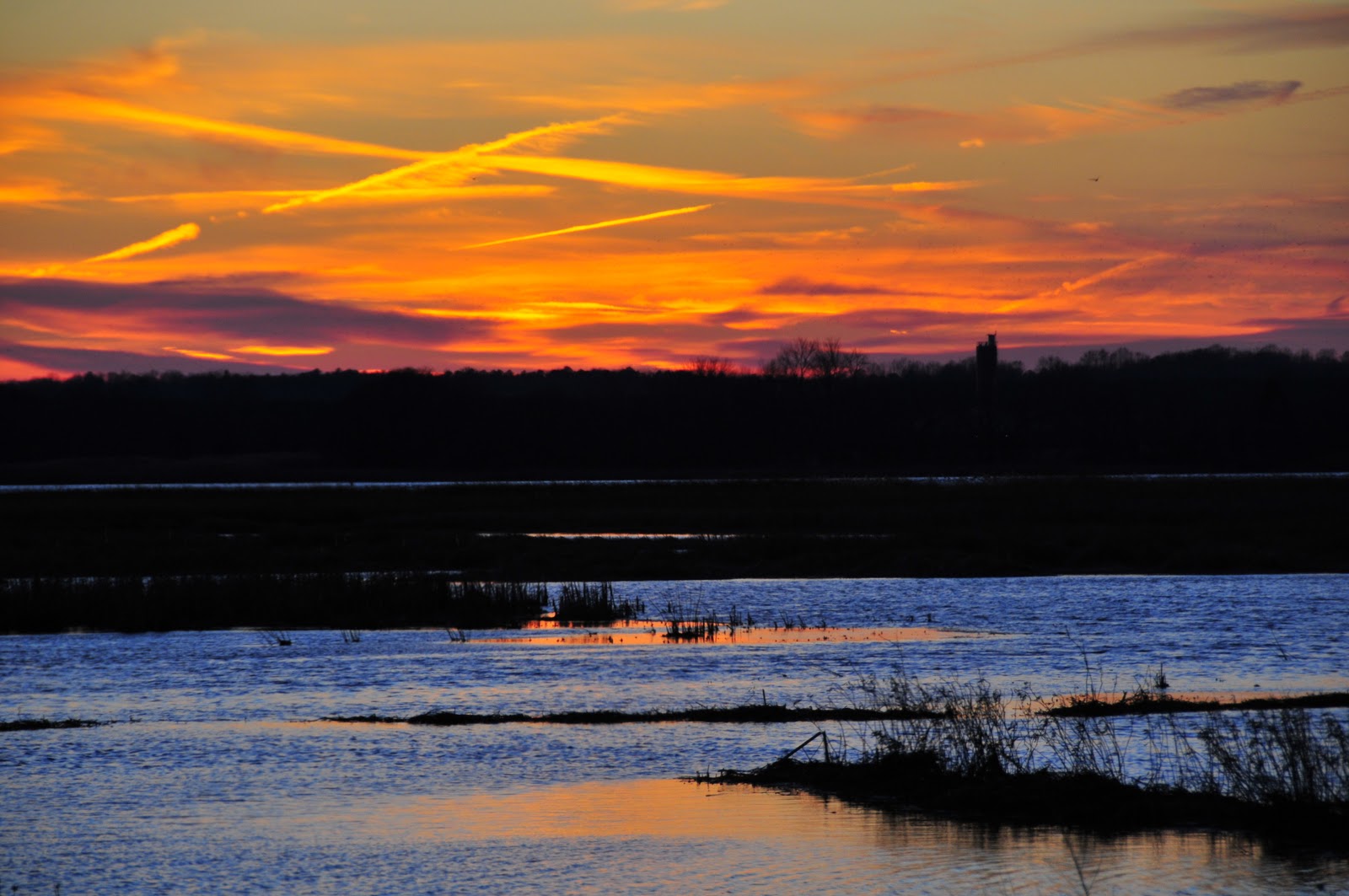
and landed in Easton, MD  with a glorious sunset, welcoming our arrival on the shores of Maryland. 

The inbetween of the day was marked by brisk walks and visits with a handful of artists in Millville, NJ,  viewing Victorian rowhouses along the beaches of Cape May, and taking a rock n' roll ferry trip  (and I don't mean the musical type)  across the Delaware Bay.
 Millville is about an hours drive south of Philly and is historically known for its glassworks, with a coveted paperweight as its namesake, the Melville Rose.   Due to its abundance of natural resources needed for making glass, Southern New Jersey became the center of the American glass industry with its ealiest successful glass factory founded in 1789 by Caspar Wistar.  Along side the efforts of early pioneers, such as Wistar and Dr. Wheaton,  a pharmaticist who had his pharmaceutical bottles made by a Millville glass company, it was Wheaton's grandson who cemented Millvilles ability to continue its deep association of glass today through Wheaton Arts Center, a working glass studio and museum of american glass art.  The Wheatons first collection was held in their residence on High Street in Millville, which today is embracing the arts as means to revitalize High Street into an arts district, which was later moved into the Wheaton Arts Center.

During this leg of our journery,  A. Paul and I had the opportunity to walk High Street and visit the few open businesses/galleries along the road followed by a  drive to nearby Wheaton Arts Center. Both visits were informative and inspiring.

At Wheaton Arts Center, we resourcefully poked around until we caught the attention of someone in one of the main studios.  As it happened, it was the glass studio within the center.  The center closes at the start of January but the main entrance to the quasi-Victorian village  is still open for museum viewing during Jan - March, when the season begins again for the Arts Center, thus why we were able to poke around.

Kerry Filiberto and Andrew Newbold
Inside the glass studio, we hooked up with three sociable and likable artists, Don Friel, one of three artists who continue to make the Mellville Rose paperweight, Andrew Newbold, who works in various mediums, and Max Lefko, a Northamption artist now living in Millville.

The large space surrounding the major central kiln can seat  50+ people and in season the studio is most commonly used as a working demonstration center where apprentice and laymen learn the secrets of glassmaking, though one is hands on and the other through viewing.  Though none of the artists we spoke to actually have their own website, you can read about the history of the Wheaton Center and Don Friel is a featured artist on the site  http://www.wheatonarts.org/

A. Paul with Don Friel, left

Our jaunt down the main street of Millville, called the Glassart District, was closed to through traffic due to the total collapse of its 1905 theater, A. Paul and I were able to walk the streets and visit one ceramic works studio run as an extension to Cumberland County College called Clay College.

The 150 feet long studio with 15 pottery wheels and four kilns is a fully functional studio with gallery exhibit space at the front.  According to the Clay College director, Jacqueline Sandro, the school participates in the Third Friday openings alongside other businesses and galleries on the street where she exhibits the works of its students. 

Clay College Ceramic Studio  Sharon (r) and Jean (l)
When we visited the site, there were two wonderful, non traditional students, Sharon Vitale and Jean Helmer, who were working on their ceramics. Both were kind enough to continuing working while A. Paul photographed them. 


Sharon Vitale
The other major center on High Street is the Renaissance Center, which was unfortunately closed.  The town of Millville definitely demonstrates a commitment to advancing the arts and should be on anyone's list to visit but I would suggest in season to experience it fully.

Cape May
Cape May

White beaches, victorian style houses, and fun. Though the town itself was in hibernation, it is easy to see that Cape May is a quaint, fun loving beach town.   Long stretches of white sand balance the colorful rows of new and revived victorian homes that dot the main beach road.  About two blocks into town is a walking-only shopping district.


After a short frolic on the beach, we headed to N. Cape May to catch our hour twenty minute ferry ride across the Delaware Bay.  The ride was a bit cool and bumpy but we simply bundled up in the car and headed out with the sun on our faces.

Once on the other side, Delaware and Maryland's wide open fields were drenched in soft hues of colors, with an enchanting, dream-like sunset greeting us. 

Tomorrow we explore Easton's Academy of the Arts and make our way to Washington, DC.


Entering Easton

Thursday, January 20, 2011

Barnes Foundation & Spring Garden Studios

Barnes Foundation
Located just outside of Philadelphia in Merion, you will find one of the largest, private collections of Impressionism, Post-impressionism, and African Art; at least for a few more months.  In June this year, the Barnes Collection will close as the entire collection of art will be moved to its new home in Philadelphia.  The new location is slated to open to the public in July 2012.  For this reason only half of the collection was viewable today; the entire top floor of 10 salons of art were roped off from viewing.  Even so, the short, congested travel to the site was worthy of the time.  Cameras were not permitted so I cannot offer any images of the works coveted in this private foundation estate and arboretum but can speak to the extant of the collection that we were able to view.

The Barnes Foundation was established by Albert Barnes in 1922, to "promote the advancement of education and the appreciation of the fine arts."  With an amassed collection of 180 Renoirs, numerous Cezannes, Van Goghs (including a Van Gogh self portrait), Degas, Soutines, and other works, Barnes established his teaching salons of art ensembles that would rival any teaching institution today.  It is without question one of the most profound collections of art I have seen outside of an established museum.  I kept rotating back into various salons just to take a second and sometimes third view of a piece of work. 

If you do have the chance to visit the Barnes Foundation in the future, it is advisable to purchase the headset for touring to get the most out of the visit.  If attempting to go to the current site, do know that you will need to make a reservation ahead of your visit.  Come prepared with cash, as you will need to pay for parking and they only take cash.  Do not attempt to bring any handbags, cameras, or other electronics as you will be asked to store them in a locker.  Outerwear coats will also need to be checked in at a coat room before entering the gallery area.  If you take the first tour in the morning, 9:30 am, wait in your car if it's cold as there is not a holding room inside, so you will be forced to stand outside in the cold until the doors open at 9:30.  Hopefully, some of the stringent protocols surrounding entry into the collection will lessen once the collection moves to its new location. Overall, it is a definite must see on any trip to Philadelphia.

To learn more about the Barnes Collection, you can visit the their website http://www.barnesfoundation.org/.

After our visit to the Barnes Collection, A. Paul and I were fortunate to meet two artists, Robert Sampson and Patrick Crofton, whose studios are housed in an old factory building located on Spring Garden  Road in the city. Both artists are recent graduates from PAFA, the oldest art school in the country, located in Philadelphia; both entering into the artist world after previous careers.

L to R:  Patrick Crofton, A. Paul, & Robert Sampson
Both artists' works are strongly influenced by their city environment. Both capture the intensity of light and shadows that exist around the rigid city landscape, balancing the forms with an intentional break of color or curve to ease the viewer's eyes.  Patrick prefers to render his works on flat surfaces of copper while Robert chooses to create his masterpieces on canvas.   At the moment of our visit, the two artists were in the finishing stages of  working on pieces for an upcoming thematic show at their representing gallery, Artists' House Gallery on N. Second Street, whose director, Lorraine Riesenbach, has been supporting works of emerging and established artists for the past 20 years. 
http://www.artistshouse.com/

P. Crofton painting on copper
More of these artists's works may be seen on their websites, http://www.robertsampson.net/  (Patrick we left without your site so perhaps you will forward it to us?) and on the Artists House Gallery website.  Overall, it was a wonderful visit and we hope that Robert and Patrick will visit us in Provincetown in the future to extend them the same courtesy they extended to us.

Tomorrow morning we leave Philly to move onto our next destination, Easton, MD, via Millville, NJ and Cape May, NJ.  We hope to escape the predicted snowstorm so check back with us tomorrow night to see our next leg of our tour.

Wednesday, January 19, 2011

Lambertville, New Hope, & Philadelphia


Lambertville, NJ
 Lambertville & New Hope

 Not unlike Beacon, NY,  we rolled into Lambertville, yesterday, at a time when much of the town was closed due to the winter storm.  Having said this, however, our good fortune placed us in front of the Hrefna Jonsdottir Gallery, where our own artist Clare Barrett is also represented.  Hrefna was kind enough to unlock her door and invte us in for a chat. 


A. Paul & Hrefna

Over the past years, many of the galleries once located across the bridge in New Hope, PA have relocated to Lambertville, joining the already established art venues, such as Hrefna's gallery which has been in existence for over 20 years. The result of this relocation is the transformation of Lambertville into a quaint town filled with antique shops, galleries, small alleyways, cafes and endless charm. After thanking Hrefna for her time, A. Paul and I strolled the streets peeking in the windows and taking in what few shops that were open, noting that we would need to return to Lambertville in the future.  For anyone that is traveling here or looking for a winter activity, Lambertville and New Hope join together to celebrate their Winter Festival, January 22-30, 2011.  Once back in the car, we passed through New Hope, PA on our way to Philadelphia, an hour's drive away.

Philadelphia

City Hall, Broad Street
 We rolled into the City of Brotherly Love just as the city entered into its nocturnal life; a sight beyond words.  The juxtaposition of the historic buildings, such as city hall, against the sleek contemporary highrises washed in neon glow, provided just the right mix for A. Paul's interest.  Philadelphia at night is inexplicably alive.  What is cloaked in shadows of the night become fully visible during the day.


Top of our list during our first day in Philadelphia was the Philadelphia Museum of Art.  Though the cold weather persisted, the sun forced its way through the morning clouds, offering us a fine day to explore the city.  Located at the end of Benjamin Franklin Parkway, the Philadelphia Museum of Art dominates the landscape.  One can hardly look away but if you can, along the right side of the parkway you will see the construction of the soon to be new home for the Barnes Collection, slated to move 2012.  Just past that, the Rodin Museum offers one of the most comprehensive collections of Rodin sculpture dotting the outside landscape.


Philadelphia Museum of Art

Once inside the PMA, A. Paul and I chose to start in the European Art wing to take in the Impressionists.  It was impossible to not feel inspired and moved by being surrounded by Cezanne, Monet, Renoir, Van Gogh, and their contemporaries. We each had our favorites of the collections.

Rodin

We continued to explore the American artists and abstract expressionists, then searched out work by Franz Kline, relative of Cortile Studio visiting artist Paul Kline, and finally found a later, large scale piece that was a detour from his traditional black & white work, below.

 The PMA's collection of art is extensive and impressive.  We took a tremendous amount of images and have a great deal to share once we have time to sort through the selections. 

Tomorrow , we head out to see the Barnes Collection very early in the morning, trying to beat yet another approaching storm. 


Later in the afternoon, we are fortunate, thanks to Lorraine, the owner director of the Artists' House Gallery below, to visit artist studios housed  in a converted warehouse on Spring Garden in Philly.

We promise to fill you in on our day tomorrow and hopefully share some images of the extraordinary works we are seeing.

Tuesday, January 18, 2011

As Day One Closes


Philadelphia, PA-- awaiting tomorrow's exploration
Tucked away in a cozy room overlooking the skyline of Philadelphia, I can now take time to reflect upon the first day of our trip.   The morning promised a bleak start to our trip as A. Paul & I headed off from Saratoga Springs, NY.

Jan 18, 2011- leaving Saratoga Springs, NY

Snow and ice laced the roads, cars strewn along the way reminded us of the casualties of traveling on days such as this; for awhile travel slowed  to a paltry crawl.  The frigid cloak of gray threatened to eliminate any glimmer of glee of our departure but we refused to give heed to it.  Instead we took in the otherworldy beauty of winter, such as the tall fronds along the highway gracefully bowing under the weight of their snow capped foliage as if in reverence to Mother Nature. 

As we made our way past the the outerskirts of suburbia, diffused light pushed its way through the dimness and snow changed to rain.  As if on cue with the change of climate, the terrain became serene scenes of rural landscapes where remnants of the last harvests stood frozen in time, broken up only by groves of silhouetted trees standing guard. As we reached the Catskills, the flat roads turned to subtle undulating hills sandwiched between snow capped ridges with frozen cascades reaching to to the road.


One hour outside of Beacon, NY

Eventually, and in safety, we crossed the Newburgh Beacon Bridge into the town of Beacon. 

Newburgh-Beacon Bridge

I am not sure what exactly we expected this bridge to look like but it would be an understatement to say that the expanse and beauty of it spanning across a vast frozen sheet of ice, was breathtaking.  It more than made up for our inability to visit the several venues we had hoped to visit in Beacon.  We knew at the start of this tour that given the weather, time of year, and day of the week, we would run into towns, especially smaller ones, where some venues would be closed.  This was true about Beacon, NY.  We did, however, locate the galleries, studio, and Dia:Beacon and were able to speak with Dia:Art in NY and Todd Spire of Spire Studios, who have agreed to later interviews about the art movement in Beacon.  Though our visit was reduced to a visual tour and a quick lunch in a retro-styled diner, the Yankee Clipper, Beacon was still worthy of the stop along our way. Not unlike other struggling, post manufacturing towns, storefronts along its Main Street are still struggling to fill space, but the structure is in place and the town shows signs of recovery. I look forward to my later conversations with Nikki and Todd.


entering Beacon
Yankee Clipper


Dia:Beacon
wall murals
                  

By 1:30 we were back on the road towards our next stop, Lambertville, NJ and New Hope, PA.  Unfortunately, it's late and tomorrow is yet another day of great discovery so insights into these two towns will have to wait until tomorrow's posts.  For now, sleep well whereever you may be reading this blog.


Time to Travel

It's 7:00 am in the morning the first official road day of the Art Tour Across America. Excitement is building so is a bit of anxiety as I hear the snow plows scraping the roads outside my window. Mother Nature is offering her first challenge of undoubtedly many on a road trip of this magnitude. I have confidence, however, that A. Paul and I are up to the challenge. First stop will be Beacon, NY, as stated in the previous post, given we manage our way through the winter storm that is intent on traveling with us. Our final day's end destination is Philadelphia, via brief stops in Lambertville, NJ and New Hope, PA. We will spend 3 nights in Philly, then onward to Milleville, NJ, a small glass art community, Cape May, NJ to explore its Victorian architecture, cross the Delaware (make way George), finally landing in Easton, MD, a small historic theater town outside of Washington, DC.

Please check back on the blog to read about our days findings and to view photo images. Feel free to join the tour and add your suggestions of venues we should include in our travels in areas that you have previously visited or have lived.

Thursday, January 13, 2011

"In traveling, a man must carry knowledge with him, if he would bring home knowledge"  --Samuel Johnson

January 18, we begin our journey, starting with the small town of Beacon, New York.  Beacon, located in the Hudson River Valley about 90 miles north of NYC, was once dependent upon manufacturing for its economy.  Today it is a haven for the arts. Thanks to the tutelage and vision of the Dia Art Foundation, Dia:Beacon now tops the world's list as a "must see" contemporary art site with its conversion of a 300,000 square foot defunct Nabisco factory into a 240,000  square foot art complex with more than 34,000 square feet of skylights.

To learn more,  visit Dia:Beacon's website  http://www.diabeacon.org/sites/main/beacon

Other should-see sites within the Beacon community are the converted defunct high school which now is home to Beacon Studios, http://www.beaconstudios.org/  and Open:Space, which primarily houses subculture comtemporary art and atists studios  http://www.openspacebeacon.com/

We are keeping our fingers crossed for a private tour to Dia:Beacon but will be visiting the other spaces as well.  Please join us as we share our findings of this small art-based community of Beacon.